New Jersey Food Journal

Monday, May 18, 2015

The Three Courses of Restaurant Regret

Large Meal provided by Rob Smith


By Michelle Lulic

As I sit in my tiny college dorm room, my stomach is begging me to feed it a nutritious meal. However, this healthy eating struggle is not only relevant when I am limited to eating at dining halls or heating up Ramen noodles before class. This nutrition scarcity problem occurs all school year. But the worst had to be when family members and friends wanted to take me out to dinner over Spring Break. While this may sound like a good thing, each friend, parent, and grandparent filled up my schedule with the healthy eater’s worst nightmare: “Where do you want to go out for dinner?”

Obviously, I’m not completely against going out for dinner. In fact, I love it! I have dreamt about feeling the heat of a freshly served sizzling fajita platter on my face. But allowing family to take me out for both lunch and dinner for four days straight taught me a terrible truth. Eating out is not as satisfying as you might imagine. Although my meals were varied with everything from fast-food, to chain restaurants, to mom-and-pop places, eventually it all just seemed to feel like I was eating the same thing. My food started to lose its significance as I emptied kitchens across the Long Island, New York area. I had everything from burgers, to tacos, to Chinese, to Japanese, to German, to both “Italian” at Olive Garden to Italian at my town pizzeria, Gino’s. Eventually I found myself blindly staring at each menu with no idea as to what I felt like having. I lost my appetite. My stomach needed a break.

But, why was eating out at so many restaurants making me feel so unenthusiastic about food? Only two out of the eight restaurants I ate at I didn’t thoroughly enjoy. But at the end of each day my stomach continued to feel as if it was going to explode. So, I decided to look into why I felt this way a little more. That’s where I found out the horrible truths. “As few as 3 percent” of selected Top 400 U.S chain restaurants were, “within limits for sodium, fat and saturated fat,” according to a 2013 study from Helen W. Wu and Roland Sturm. “Food portions in America's restaurants have doubled or tripled over the last 20 years,” according to The National Heart, Lung, and Blood Institute as well. In fact, “order an appetizer instead of an entrée, share an entrée or eat half of a meal and bring the rest home,” is what the National Heart, Lung, and Blood Institute suggests to people who are eating out.

Suddenly, it all made sense. Of course I was losing my appetite! Their higher portion sizes were making me take in more food than I am supposed to eat in one sitting. Plus, in addition to my initial meals, eating out made me eat more dessert than I usually do. Out of the eight restaurants, I got dessert at five of them — even when the rest of my meal was sitting half eaten in a doggy bag next to me. Dessert: a course I could have very easily avoided if I had eaten at home. 

Eating at restaurants was not only making me lose my appetite, but it also ended up emptying my bank account. Since I was “on vacation” I didn’t really pay too much attention to the prices. Therefore, I often found myself regretfully handing over my credit card to pay my share at the end of each meal. According to Zagat’s 2015 Dining Trends Survey, the average price per person for dinner out is $39.40. And that price raises to $48.15 when talking about a meal in New York City! It’s no wonder the restaurant industry plans on gaining $709.2 billion in sales in 2015.

Now that Spring Break is over, the last thing I want to do is eat out at another restaurant. I am on a search for fresh fruits and vegetables that I can prepare in my own kitchen. However, my stomach is growling as I write.

Michelle Lulic is a senior at Rutgers University, studying Journalism and Media Studies with a minor in Theater Arts. She loves to tell stories through both writing and acting.

Sunday, April 26, 2015

Coffee Rehab

Credit: Coffee photo via Shutterstock


By Jenny Goldberg

Its 2 p.m. and my flight from San Francisco to Newark has just been canceled. “We can not fly anyone out until Monday night after the storm passes,” the flight attendant tells me. After I mentally roll my eyes at the airline employee, and take a meditative deep breath through my nose, I call my dad. In a more calm conversational tone, I tell my dad my dilemma: I have a midterm exam on Monday, and need to be home by tomorrow the latest.  Dad tells me to go purchase a standby ticket from another airline company.

Following my dad’s collected and wise advice, I find my way over to United Airlines and purchase the ticket as told. I see five different potential flights, ranging from 2 p.m. – 10 p.m. This leaves me with a merciless six hours in San Francisco International Airport.

The longing for a cup of iced or hot coffee to get me through the next few hours begins to crawl under my skin like a parasitic disease. However, I can’t appease my craving, for I have been coffee-less for the past week.

Being an avid coffee drinker since the age of 16, it is safe to say that coffee is a staple in my diet. My addiction was rendered through my mom, who has forever embraced the sunrise with the smell of dark French roast coffee. These mornings before high school were characterized by lazy conversations over the kitchen table, while we sipped the hot dark liquid from our rainbow assorted coffee cups.

Through out the years, I submitted myself to the seduction of the taste, which has consequently affected my ability to feel awake naturally. In high school health class I rubbed off the lessons in which teachers told us caffeine is an addictive drug. Although science can explain the reasons, I never thought it was something I would find myself dependent on.  But as I sat in the airport with nothing to do but await my impending flight, I realized the seriousness of my addiction. The front of my head ached like there was a man pounding my skull with iron fists. My eyelids felt as though they were window blinds being pulled shut. I needed coffee but I continued to resist my temptation.

That night around 10:35 p.m., I got on a red-eye flight back home. At this point, my internal body clock had completely malfunctioned and the back of my neck was ready to snap off and walk away from me.

Although this experience was awakening to the seriousness of my coffee addiction, coffee is something that I am not willing to give up. Admit me to an anonymous meeting, but the smell, taste and feeling of coffee in the presence of morning’s dew becomes irreplaceable. These moments of small conversations at the kitchen table signify the small treasures in life that if not celebrated, become just another monotonous day in the life. 

Jenny Goldberg is a sophomore at Rutgers University with a major in Journalism and Media and minor in Cinema studies.

Thursday, April 23, 2015

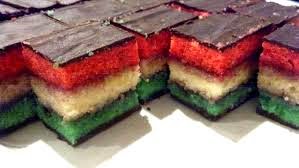
A Cookie Better Than Grandmother's

Photo by Cookingwithgrace.net

By Michelle Lulic

The thud of the glass jars hitting the counter suddenly overpower the soft crinkling of the plastic bags. My older sister and I quickly scamper into the kitchen to find just what we expected: the start of the holiday season. Pretty soon our home would be whirling with the aromas of butter, chocolate, peanut butter, ginger, almond, and raspberry. Each scent teasing our tastebuds with hints of what seven cookies we might place on Santa’s plate.

Every year a variety of different flavors make their way into our mixing bowl. The Scandinavian blood in our veins guides us through the recipes of seven different cookies. Just as it has guided my Norwegian ancestors after they skied home with all of their desired baking ingredients. Kitchens in my family tree have continuously given life to traditional favorites — such as the pepperkaker (the gingerbread cookie) and the kokosmackroner (coconut macaroons) — however, each kitchen has also opened its countertops to flavors we have not yet explored.

As my sister and I start sectioning off the ingredients, we aren’t surprised to see the jars of raspberry jam placed alongside the green and red food coloring and the golden bags of chocolate chips. My grandma’s rainbow cookie makes us salivate at just the mere thought.

The recipe, although accredited to my grandma, was taken from two German sisters she knew as a young girl. The three of them would play together and, one day, the two girls took my grandmother to their family’s German bakery. One bite of the baker’s rainbow cookie aroused my grandmother’s senses. She then begged the sisters to share the recipe. The girls entrusted my grandmother with the secret ingredients, thus weaving my Norwegian and Italian family with the German tradition.

For years my family has passed on the recipe from the two German sisters. But in 2011, the recipe surfaced where I least expected it. I was a freshman in college and was just about to spend my first Christmas with my current boyfriend of four years. He had insisted that his German mother made the best rainbow cookies in the world. We bickered back-and-forth as I insisted that there was no way it was better than my grandmother’s. We then placed each cookie into the center of each other’s palm. At the count of three I lifted his mom’s cookie to my lips and bit into the chocolate covering down through the moist nutty texture of its three layers. Both our eyes widened as the cookie swooshed around in our mouths. I can recognize that taste anywhere.

It remains a mystery whether our recipes came from the same German baker. Either way the cookie will always connect me to the love of my family and the love of my life. While the seven cookies chosen each year continue to cycle through, I can guarantee that one will stay on my list for generations to come: the rainbow cookie.

Michelle Lulic is a senior at Rutgers University, studying Journalism and Media Studies with a minor in Theater Arts. She loves to tell stories through both writing and acting.

Monday, April 20, 2015

A Thanksgiving Feast

Vending Machine illustrated by Jenny Goldberg
By Jenny Goldberg

We wait in line to sign in. The guard resembling a Neo-Nazi stares at us from over his desk. His bald head and menacing brown eyes make me feel small and insignificant. His crass voice breaks the silence. “Take out your license” he barks, and we obey. His pudgy white hand provides us with a piece of paper.  We fill out the sheet, my mother and my two sisters. This has become a standard ritual for us as we transform ourselves from people into simple broke -down demographics and data. My ease for laughter and lightheartedness disappear. With an OK from the guard, we leave the main entrance and go into the common area. The room is overwhelmingly hot, not only due to the number of people in the room, but to the excessive heat that blasts from the old and dusty vents. Dad says that this is the only room with proper heating in the entire facility.

My sisters and I collect chairs from throughout the room. We begin this conquest by asking people politely if we can borrow this and that chair. They nod, we thank them, no one smiles. I dread this most. I am intruding on personal time with loved ones. After we find a nice enough location to situate, I walk to the vending area, an alcove off the common area. A huge sign looms. “NO INMATES ALLOWED IN VENDING AREA.” Every time I read these words, every inch, blood vessel and bone in my body turns numb. I hate this place, and I hate how they treat my dad. Hate is a word not frequently used in my vocabulary. But on visiting days, hate is not just a word. It is part of me.

 I have packed enough quarters to weigh down my pockets. I approach the vending machine and slip quarters into the slot. Limited options are displayed behind the clouded finger smudged screen, but I don’t care. I want a colorful pretzel bag in the hands of my dad. I want him to know that things are going to be OK even if it is for only a few minutes. Pretzels are his favorite snack. At home during happier days, I would watch Dad grab handfuls of pretzels from our family fun-sized bag, and dip them, individually, into Heinz spicy yellow mustard. I reminisce on the countless pretzels Dad and I have shared at hockey games and state fairs. But reality stings me like a slap in the face as I realize we are not at the Meadowlands County Fair. We are someplace much different. A place surrounded by black hovering cameras, distasteful paint colors and gloomy strangers.

I needed to shine light on the past in order for my dad to remember a time when life was good. A time where laughter echoed throughout the cool summer air and happiness filled our lungs.

I enter D6 into the machine and watch the black spiral push the bag of Snyder’s pretzels from its designated place and fall gracefully into the bin below. I make my way over to my family and hand my dad the goods. With the pretzel bag in hand I watch his aged, downtrodden expression lighten, and for a split second I think I see the sides of his mouth curl upward. At this moment I know he is being teleported to happier places and times, and I watch him indulge his Thanksgiving feast.

The next two Thanksgivings are a blur. My family is physically back together, but mentally apart. We try to move on, but a gaping hole prevents us. I don’t know what to think of the past and I can’t shake the memories of visiting Dad in prison, so I hold on to them.

Jenny Goldberg is a sophomore at Rutgers University. She is a full time student, pursuing a major in journalism and media studies and minor in cinema studies.

Sunday, March 22, 2015

Home of the Heart in Heartbreak


By Emily Beckman

He said there was someone else – someone better. He said it was crazy and unexpected. Well, there was certainly no kidding about the unexpected part.

At that moment, my credit card felt the pain nearly as much as I did. The gym membership, the subscription to The New York Times, and the shopping sprees all led to this one moment -her.

A year ago, any impressive facts I could massage into conversation were gold for earning his attention. Reading The New York Times health section every morning to accumulate material to spark conversation became crucial in my daily routine. The love handles I had gained from reckless partying freshman year clashed against his six-pack, so I ran. I ran everyday with I Want Crazy by Hunter Hayes blasting on repeat for the last half-mile. My rebirth as a cardio bunny caused me to drop 15 pounds. More scientifically educated and more toned, I was on my self-created path to success.

But I was deceived. It all culminated to sitting at a table against the front window of the Country Pancake House. Cradling my mug of black coffee, I hypnotically watched the Ridgewood traffic whiz by. After awhile, I looked down again at my phone. Scrolling back through my Facebook newsfeed, the banner was still there. It featured a photo of him cuddling her on the beach, labeled as In A Relationship.

Tears welled up as I grabbed a square of cornbread from the woven basket aside a delicate dish of fresh butterballs. The sweet bursts of cocoa flavor from the embedded chocolate chips offset the taste of my coffee and my bitter emotions. The cornbread’s lofty yet rich body was reminiscent of a treat I’d expect to emerge from my grandmother’s oven – the treats that I had avoided for months to please him. I was hit with a sense of familiar comfort.  

I perused the menu, with more than 112 pancake options. Making a decision at the Country Pancake House is a chore, exactly what I needed to distract myself from the overwhelming thoughts circling my mind. So many options, most of which included chocolate or fruit compote. Looking around, I saw many families and couples happily indulging. What did I have to lose? Nothing. I already lost.

The downhome attitude that no one shall leave hungry rang true when I received my order of sugary apple cinnamon pancakes. With portion sizes that quadrupled the average breakfast eatery, it was obvious why the motto is “Home of the Hearty.”

Upon first bite, the fluffy, buttery body of the pancake slowly divulged the warm bits of baked apple, making way for the sweet, woody sensation of cinnamon. Not only did the food provide physical warmth, but it also saturated me with emotional warmth. For that moment, my ex was on the backburner and it was about me enjoying that stack of pancakes. With my epiphany, I relinquished my worries about counting calories or spilling food on my dress. Drowning my pancakes in syrup, I flagged my waitress for a glass of chocolate milk.      

Emily Beckman is a full-time junior student of journalism and media studies at Rutgers University. She is also the co-editor-in-chief and fashion director of TRIM Magazine, Rutgers' student run fashion and lifestyle publication (www.trimmagazine.net). You can contact Miss Beckman at ebeckman316@gmail.com. 

Sunday, March 15, 2015

Clarity in Cooking

Tuna salad photo by @kimdublin


By Kimberly Dublin

My relationship with food began in the Philippines 23 years ago. I was born a month early. I weighed 4 pounds. My relatives made it their mission to feed me.

Growing up, McDonalds and other fast food were a treat for me. Filipinos regard food such as pizza and burgers as meryenda, a snack. If you don’t eat it with rice, it’s not a real meal.

But after I moved to America when I was 9, it became a different story.

Microwaveable snacks began to crowd our freezer. TV dinners opened a whole new world. And because of the ease and the sheer volume of such convenient foods, I gained a lot of weight.

My relatives then made it their mission to put me on a diet. I was 11 when the nagging and the shaming started. It wasn’t that I didn’t know I was big, I was very aware. I eventually came to accept it. I had spent much of my pubescent years owning the fact that I was bigger than average. Before anyone else could make fun of me, I made fun of myself. When people inquired about my favorite hobby, I readily answered that I loved food, just to drive home the point.

At 18, I became vegetarian. But much of my diet still consisted of microwaveable foods – now only involving items that didn’t contain meat. After seven months, the Thanksgiving turkey won me over and persuaded me back to my meat-eating ways.

In my first year of college, I left the microwave for take-out. Delivery made everything easier. All I had to do was open my laptop and wait without ever leaving my bed.

It wasn’t until I moved back home during one of the most stressful semesters in my life that I had decided to pick up cooking. I had been watching the Food Network for years, always thinking, why not?

To this day, I’m unclear what lead to my moment of clarity. One thing is for certain: I decided to try my hand at cooking and have never regretted that decision. Some things came easy, such as putting various flavors together that complement each other. Other things, such as boiling water, took longer to master. Cooking was always daunting, but it has lead me to a better place, both physically and mentally.

Cooking also has become meditative. It constantly reminds me to be in the present. It has helped clear my mind, and I am happier. You can really find zen in chopping vegetables.

The more I learn about food, the more I care about not just its origins but the processes in which to prepare them. I’ve begun to make dishes with fresh ingredients and am learning more about nutrition.

I still have a complicated relationship with food. Sometimes my body craves chicken nuggets from McDonalds, and I’m OK with that. I’ve come full circle -- fast food and other junk are for once in a blue moon. Though I don’t call them treats anymore. I think the food that I make is much more special.

Kimberly Dublin is a senior journalism student at Rutgers University. She is a contributor to TheFatKidInside.com and is an editorial intern at EdibleFeast.com. 

Friday, March 13, 2015

Destination: Pesto

Self-made pesto in mortar by Flusel


By Mary Kubik

Growing up in Lambertville, I knew warmer weather was approaching when I heard my dad calling me from down the hallway to go for a bike ride along the Delaware Canal towpath. I would barely make it out of the gate before he bellowed “helmet!” in a deep, baritone voice. Once the helmet was on, any attempts at appearing cool vanished, as none of the other neighborhood kids were forced to wear one. But dad’s advice was that it was better to be alive and dorky than cool and dead.   

Our average ride was 2 miles and our destinations consisted of two places. One was a boat dock and access to it required a ride down a hill that jerked your body around more than a roller-coaster. Our other, no doubt preferred, destination was what the townies refer to as the “wing dam.” It is a concrete structure about 15 feet wide and 150 feet long that extends into the river. In either location, an immediate rock-skipping contest took place. Once the victor had reached eight skips, we would sit and talk while watching the sunset. Popular topics for conversation included soccer, which was our favorite sport, and what I wanted to be when I grew up, which changed constantly.

Returning home from a ride, dad’s move was to fill a glass with ice and grapefruit juice, often returning to the fridge for another refill. I stuck with the classic, boring choice of plain water. After we had quenched our thirst and replaced the liquid our bodies had sweated out, it was time for making pesto. Every ride would end with pesto. This was my favorite part.

With two older brothers whose interest in bike rides and cooking was minimal, I was the one chosen to be the chef’s assistant, which gave me a sense of purpose and satisfaction. My job was to peel the basil leaves and most importantly, to be the taste tester. Together my dad and I would take a piece from a fresh baguette he had purchased earlier that day and dip it into the blender filled with the creamy, pungent, savory pesto mixture. As we slowly chewed on our bits of bread, letting our taste buds absorb the various tastes, we would contemplate what ingredient needed to be increased. What would take it from merely good to brilliant? Was it more pine nuts, garlic, olive oil or basil leaves? Sometimes it would be olive oil -- olive oil he insisted must come from Italy. Usually we wanted more garlic. Garlic is the golden ingredient. Everything could use more garlic. Any guests who tried dad’s pesto were first asked if they liked garlic. The garlic sticks with you until the next day, the smell emanates from your fingertips. To me, that is what made the dish.

After trying 20 or some odd pestos from various restaurants and countries, my dad’s pesto comes out on top. I rarely find that there is enough garlic added to the mix, an ingredient that in my opinion complements the earthy and subdued flavors of the pine nuts, and the smooth, lush flavor of good olive oil. Most pestos are bland, tasting like grass and grainy chunks of dirt, generally lacking the punching flavor I recall so well.                     

January of this year my dad got a job at University College London as the chair of the Eastern European Studies Department and will be there indefinitely. While we Skype often, and discuss my future visits to London, the absence of his presence in my daily life has left an emptiness. I long to hear the bellowing cry of “helmet!” that used to embarrass me when I was a teenager. Since his departure, I went on a pesto search. In all pesto-tasting situations, I stared at the plate, announced to myself, “You will be the next best pesto, my friend?” Perhaps I hoped to find a pesto that would immediately transport me back to those bike-riding days.

After many failed pesto tastings, I accept that I will have to wait for him to visit until I can finally savor the sauce I love and desire. Making it together, side-by-side, dipping piece after of baguette into the mixture until it was just right, that is what made the pesto. I vow to one day share the art of pesto-making with my children the way my dad did with me, giving them their own feelings and flavors of specialness. No restaurant can serve that on plate.  


Mary Kubik is a senior at Rutgers University, majoring in Journalism and Media studies with a minor in History.

Tuesday, February 24, 2015

An Uncelebrated Gift


By Jessica Britvich

I stared at the bag of potato sticks in my hands as I crossed the yard from my neighbor’s house to my own. My face stared back at me, a distorted reflection on the blue aluminum bag that announced “POTATO STIX” in a bubbly font too whimsical and excited for a day like today.  “I can’t eat these,” I thought to myself. These aren’t supposed to be mine.I imagine my neighbor navigating the aisles of our local grocery store just the day before. Despite bad knees and arthritis, she managed to fill her buggy with the essentials for a homey and humble belated Christmas dinner. Sweet potatoes, a rotisserie chicken, a box of chocolates for dessert. Maybe that’s when then the shiny blue wrapping and red bubble letters caught her eye.

As she reached for the bag, maybe she reminisced on the days when her son would run home from school, kicking his shoes off right at the door and sliding on the linoleum floor to the kitchen pantry where he would reach for his favorite snack. As she placed the familiar bag of potato sticks in her cart, maybe she smiled, thinking about the days when her biggest worry was snacks before dinner. Before her son had a child of his own, before her son had cancer.

“But I know that when she pulled the blue-and-red bag of potato sticks from her pile of groceries and placed it on dining room table, she wasn’t thinking of me.”

As she walked to the checkout line, maybe she thought about her granddaughter. Maybe she pictured her coming through the door and smiling at the bag of potato sticks waiting for her on the dining room table. Maybe the red-and-blue bag was a snack exclusive to grandma’s house, only to be eaten on grandma’s lap as the family sat around laughing and smiling and simply being.

My neighbor may have thought of all of these things. But I know that when she pulled the blue-and-red bag of potato sticks from her pile of groceries and placed it on dining room table, she wasn’t thinking of me.

But then a family visit turned into a totaled car, a visit from the coroner and later, a visit from me. We sat and cried over the story of how her son was supposed to die of cancer but didn’t. And how her granddaughter was supposed to grow stronger from the experience, except she never had the chance. As I was about to leave, she led me to her dining room where she picked up the centerpiece, a blue-and-red bag of potato sticks. “You and your sister are my girls,” she whispered.
I entered my back door and placed the bag of potato sticks on the counter. I didn’t feel that they were mine to eat.  Because these potato sticks are not supposed to be mine. Because her family is not supposed to be dead.

Jessica Britvich is a senior at Rutgers, double majoring in Journalism and Political Science. 

Monday, May 5, 2014

For High School Senior, a Greasy Welcome

"Fat Darrell" creator Darrell W. Butler outside RU Hungry, one of the Grease Trucks at Rutgers University.

By Erica M. Szkola

In front of Scott Hall on the College Avenue was the last place I thought I’d be. My friend and I were hungry that summer night. If it were any other day, it would have been a quick run to the nearest fast food place and back to my movie marathon. On this day, we decided to be more adventurous.

As we crossed the street into the parking lot, the smell of grease overpowered us. Music blared from the four trucks in the lot. A crowd of Rutgers students yelled orders in what seemed to be a very unorganized fashion. Yet the man popping his head out of the truck didn’t miss a single order. He seemed to rather enjoy it, as did the students. But what exactly was inside the brown paper bags?

“We’ll have two fat beaches,” said my friend Jessie. “Erica, you can’t come to Rutgers next year without having a Fat Sandwich, it’s a tradition.”

“I ate until I couldn’t eat anymore. I looked down at my lap. Still half a sandwich left. I just couldn’t do it, and I felt defeated.”
The Fat Sandwiches had the most interesting combinations of ingredients. At first glance, they didn’t seem appetizing at all. How was it possible to fit so many side orders into one paper bag? It still boggles my mind.

But there it was, heavy in my hands: cheese steak, chicken fingers, mozzarella sticks and French fries, completed with a mixture of ketchup and mayonnaise inbetween the warm, slightly toasted roll. I wasn’t sure how to go about taking a huge bite of the sandwich, so I began eating the fries individually. I understood by the blank look on my friend’s face that that was definitely not the way you were supposed to eat it.

When I had the first bite, I understood why a Fat Sandwich was such a big deal at Rutgers. A sensation of satisfaction. An entire meal in one sandwich, yet none of the flavors overpowered. An impressively fulfilling meal, as unhealthy as it was.

I ate until I couldn’t eat anymore. I looked down at my lap. Still half a sandwich left. I just couldn’t do it, and I felt defeated. It was the first time visiting the school I would be attending in a couple of months and I couldn’t even finish a whole sandwich. “It’s OK,” Jessie reassured me. “I don’t know many people who could finish an entire Fat Sandwich on their first try.”

Something about the smell of grease, and the way students gathered in all hours of the misty night to share the experience of the Fat Sandwich, made it feel like college. It was a first welcome to Rutgers. At that moment, I wasn’t a soon-to-be high-school graduate, I was a Scarlet Knight.

Erica M. Szkola is a junior at Rutgers, majoring in journalism and media Studies with a minor in cinema studies. After graduation, she plans to pursue a career in film/TV production and writing.  

Thursday, May 1, 2014

Rest in Peace to the Grease

The Fat Darrell sandwich, created in 1997 by Darrell W. Butler when he was a sophomore at Rutgers.

By Jordan Pringle

Graduating in just weeks
Many will cross that Rutgers stage
After this climactic chapter
In our books of life, we’ll turn a page.

Anxiously we depart
And leave this good ole university
But first we must say Rest in Peace
A much-deserved eulogy.

Here at Rutgers New Brunswick, in 1979,
A truck called RU Hungry produced the Fat Cat
And since that miraculous discovery,
Students embraced an undebatable fact.

The Freshman 15 is not a myth,
At RU, it is indeed very real
Yet it is well worth the extra pounds
We’ve found Heaven in a greasy meal.

Since the day we stepped on campus,
We were confronted with the truth
After being lied to all our lives
We learned of a sixth food group.

Rutgers has dining halls and student centers,
But fat sandwiches became a way of life
Busch, Neilson, Brower and Tillet closed at 9
But Grease Trucks stayed open to wee hours of night.

Frat parties over, we were kicked out
Our legs wobbly, our eyesight unclear
Confused, lost, sometimes abandoned by friends
At the end of College Avenue, we found solace here.

We stuffed ourselves with mozzarella sticks and fries
The Fat Night, Fat Elvis, the Fat Va-Va-Voom
Chicken fingers, marinara, cheese steak
We fell for The Fat Mojo, Fat Darrel, Fat Moon.

We lived for Thursday parties we can’t remember
Trying to find our way home with people we’ll never forget
Assuaging our hangovers for morning lectures at Scott Hall
The grease trucks never judged us, nor let us down yet.

The fat sandwiches were our rebellion,
Our way of sticking it to the man
They said, “You can’t eat those huge sandwiches!”
We said, “YES WE CAN!”

Now the grease trucks are scattered
Empty lot full of memories
A cultural staple gone for good,
Despite petitions, rebuttals, desperate pleas.

They said it was for our own good
As if grease trucks were a teenage phase or trend
Relinquishing the unity, the laughter, the salty calories
Why must good things end?

Separated and dispersed across campuses
It’s not the same as back in the day
We firmly believed the wheels were just decoration
We swore the trucks were here to stay.

As we leave the Rutgers bubble to enter adult life,
We see that even the most sure things can change
Those who follow will never know what once was
But with us, the fat sandwich legacy will forever remain.

Jordan Pringle is a senior at Rutgers majoring in journalism and media studies with a minor in psychology.

Monday, April 14, 2014

With Diet and Exercise, More Than Weight Loss


By Stephanie Greene

I am doing my best to take care of my health. I am a 22-year-old college senior with about 65 pounds to lose and diabetes looming. What does this mean? It means that every single day I wake up and exercise (right now I’m working through Beachbody’s Focus T25 program). I make a meal plan, and I pack all of my food before classes or work. I use a fitness app on my smartphone to log and count my calories.

Since I’ve begun this regimen, I’ve lost 8 pounds and counting (slow and steady wins the race). I usually wake up, naturally, before 9 a.m. I’m alert, active, and sharp. I’m eager to move around and be productive. I revel in the weather, take walks outside.
 
But then I was asked to change my diet for a week. I thought about going vegetarian. But what actually happened was quite different. My cheat day turned into a cheat week. For the last spring break of my college career, I did not log calories. I did not exercise. I went out to eat with my boyfriend and my friends. I indulged in wine, beer, and chocolate with a side of gluttony. I even ate at McDonald’s for the first time in months (greasy French fries and diet soda with aspartame included).

Most people would not see this as a problem. They would advise me, simply, to get back in the proverbial saddle. But the effects of my cheat week – indulging in a typical student diet – were astronomical.

I was sluggish. I could not get out of bed before 11:30 a.m. I wasted my morning, my most productive time. With morning gone, I didn’t exercise. With exercise gone, I lacked the energy to do much more than sit on the couch and watch bad movies on FX with my friends. I felt slow, mentally. It took twice as long to process events. I was grumpy and quick to get angry. (Usually I’m pretty content and patient.) Stomach pains and migraines I hadn’t experienced for months came back with a vengeance.

On my first day back from spring break, I weighed in. In one week, I had gained 8 pounds. (which, hopefully, was mostly water). Once I reintroduced my plant-based diet, my stomach pains began to dissipate. Once I cut out processed foods, the migraines mostly disappeared. My muscles are sore and my endurance has waned.

My point is simple. Take care of yourself. Treat your body right and it will reward you. Three days back on my plan, I lost 3.5 pounds. I’m alert, awake and ready to tackle the rest of my final semester. My muscles are sore, reminding me to keep working. I feel better and I’m happier.

Nobody wants to put their health at risk, and the easiest way to fend off the possibility of risk is to follow the most boring plan possible: Eat less and move more.

Therefore, I challenge you. Cut out processed foods for three days. Listen to your body and I promise you’ll be happier for it.

Stephanie Greene is a senior student of journalism at Rutgers University. She is also a blogger, freelance editor and writer with prior experience in media production. Ms. Greene can be reached at steph.greene92@gmail.com. 

Photo: Source

Friday, April 4, 2014

Traveling in London, an Exception to the Rule


By Courtney Averette

In August, I vacationed in London.  I had been looking forward to the trip, but was afraid what to expect when it came to food.  I've never heard anything good about English cuisine and pictured meals of tea and scones. Either my expectations were really low or those who have gone before me had expectations set really high, because, with the exception of two restaurants, the food was great.

We frequented one particular restaurant several times over our eight-day stay. We even had a favorite waiter, Paolo. It was an Italian restaurant called Zizzi, which we later found out was a chain. Had we known that beforehand, we probably wouldn't have chosen it.

One particular entree stands out. Linguine Arrabiata N'duja, which was a spicy n'duja sausage from Calabria, tomato sauce and linguine topped with mascarpone.  Since I'm lactose intolerant, the mascarpone was put on the side.

I immediately noticed the darker color of the tomato sauce, similar to sun-dried tomatoes, but even darker, maybe thanks to the sausage. I hesitated, not accustomed to tomato sauce being a dark burgundy, wondering if maybe the food had gone bad.

The aroma was smoky, but another smell I couldn't quite place.  I still wasn't sure whether I wanted to eat this dish.

Usually I have no qualms about trying new foods or tasting foods from different countries and regions. But this English-Italian food looked so different than the American-Italian food I knew. My cousin, who had ordered the same entree, with the mascarpone on top, had already started eating and was really enjoying her food.

My first bite was an explosion of flavors, most of which I can’t describe because my palate isn't that well-trained. You immediately got that kick of spice from the red pepper flakes and the n'duja as well as the smokiness of the sausage and slight tang of the tomatoes. That first bite made me realize I was being spooked for no reason.

My cousin mixed in the mascarpone, mentioned how good the pasta was with the cream. I was envious, and my curiosity won. I added the mascarpone. Its effect was beyond words.  The mascarpone mellowed the spiciness, not to the point where you couldn't taste it, but to a milder flavor that complemented the spice. The smooth cream slid across my taste buds like gossamer in the wind.

I later paid the price for eating dairy. But should I find myself in London, I would do it again.

Courtney Averette is a junior in the School of Arts and Sciences at Rutgers, majoring in journalism.

Photo credit: Juergen Rosskamp

Monday, March 31, 2014

A Birthday Gift, Both Slippery and Succulent


By Nicholas Andre

The summer is horrible. Your friends are all away on vacation and you’re stuck sweating your brains out in a stuffy New Jersey living room. But perhaps far worse is trying to makes plans for a sit-down dinner. Between vacations and spur-of-the-moment plans, it’s almost impossible to get whole gang together on one evening.  However, when I turned 16 in the summer of 2008, a miracle occurred. My whole family gathered for a dinner at a fine restaurant for my birthday. For all the bad parts about having a birthday in the summer, there is one thing that the season does extremely well: seafood.

We went to Oaklands Restaurant in Hampton Bays, which overlooks the Shinnecock Bay on Long Island. We pulled into the parking lot right as the sun was starting to set. A gentle breeze blew. Needless to say, I couldn’t order my usual cheeseburger here. The setting just didn’t match that kind of meal.

I never classified myself a fan of seafood. I ate the occasional flounder, cooked rather blandly, and had my fair share of cocktail shrimp at fancy dinner parties. Neither compare to this restaurant’s dishes.

“The slimy shelled creatures resembled snot and smelled like they were rotting. Oysters were far from my comfort zone, but my father insisted.”
Don’t get me wrong—I’m not saying this was the best meal I’ve ever had. Not by a long shot. But for someone who never before had a proper seafood meal, I can only compare this to what a child must feel like the first time he or she tastes a piece of candy. I simply didn’t know seafood could be this good.

I looked over the menu with wide eyes. What I thought I knew about seafood came from watching the Food Network. Whether by chance or luck, I ended up ordering a tuna steak. My father informed me that the only proper way to order that dish was to get it cooked rare, and so I did.

But before I could enjoy my meal, my father planned a little surprise in the form of an appetizer. Knowing how fresh the seafood was, he ordered raw oysters for us to share. Absolutely nothing about the oysters appealed to me. The slimy shelled creatures resembled snot and smelled like they were rotting. Oysters were far from my comfort zone, but my father insisted.

To say I enjoyed raw oysters wouldn’t be entirely true, but it’s close enough. The taste was entirely new, fresh and clean, almost like biting into an orange. The texture wasn’t gritty like it looked, and it didn’t make me gag, which was a bonus. I wasn’t begging for seconds, but I could appreciate the dish as more than a rich, pretentious hors d'oeuvre that I’d seen on TV.

By the time my steak finally arrived, I thought I’d already experienced the biggest surprise of my meal. But my tuna steak was the most succulent and juicy steak I’d ever had. It didn’t taste like seafood. The texture was that of any piece of beef, but the flavors were more refined and subtle than with beef steak. It wasn’t drowned in a sauce or marinated to hell. It was the first steak I ate where the flavors stood on their own. Every bite was as good as the last, and by the time I finished, I could have ordered two more.

The bill was hefty and we were definitely underdressed. But none of that mattered. We got into our van while the stars were coming out. The only sound was the tide going out. Everything was quiet and our stomachs were full.

Nicholas Andre is a senior in the School of Arts and Sciences at Rutgers, pursuing a double major in journalism and theater arts.

Photo Credit: Guido Gautsch

Friday, March 28, 2014

Eating in a New World


By Emily Maas

Half a pineapple sat on the plate. It was carved out like a rowboat, and its passengers were juicy scallops and shrimp. The seafood was mixed with chopped green and red peppers as well as what could only be assumed as the entire half of the pineapple in neatly chopped squares. The dish, at Shanghai Jazz in Madison, soared to the top of everyone’s radar. My plate was the most unique, and it commanded the attention of my table—my boyfriend, father and stepmother—as well as the tables surrounding us.

“What is that?” asked a wide-eyed woman, enviously. “It’s on the specials,” I replied, grinning.

It’s not like me to order something so extravagant. No one else’s plate was quite as dazzling. Talk about taking a chance. I had already taken a chance by picking a restaurant known for innovative Asian food and jazz music, as opposed to an average, bland Italian restaurant. For five straight years, I had insisted on a birthday dinner at Macaroni Grill. I could smell my usual penne vodka and hear the waiters singing, “Tanti auguri a te,” for a moment before I snapped back to the present. I must be growing up. This restaurant—and the meal choice—proves it.
 
As showtime approached, the restaurant slowly filled. Voices rose, as couple after couple walked in—some old, some young, some new—all settling into booths or small round tables.  Within minutes, the jazz quartet walked in the back door and began setting up drums and music stands and shuffling papers around.

“The entire meal left me feeling warm and comfortable, as if I were eating my own little world, a pineapple sailboat going around the volcanic island of a drink.”
As I began my meal, the overall effect of pineapple mesmerized. The juice infiltrated every bite, meat and vegetable alike. The scallops and shrimp were tender, smooth, but sweet. The peppers crunched. I couldn’t have enough. No one had ever seen me eat so much at a restaurant.

Light piano jazz with background instrumentals surfed through the air as the room calmed. People spoke less—everyone was too busy eating and enjoying the atmosphere. The quartet was playing selections from Vince Guaraldi’s “A Charlie Brown Christmas,” which included holiday tunes that reminded me of childhood Christmases.
 
But I’m no longer a child. Witness too the alcoholic beverage sitting next to my plate. It was called a Scorpion Bowl, meant to be shared, a drink for me and my boyfriend. Despite its menacing name, it was a surprisingly friendly drink.  A large ceramic bowl, decorated with blue flowers, held the pink liquid. The center held a smaller bowl of Cointreau, set on fire, giving the beverage a spectacular volcanic effect. Sugary and strong, the rum-infused drink complemented the pineapple platter, just teetering on the edge of too sweet.

The entire meal left me feeling warm and comfortable, as if I were eating my own little world, a pineapple sailboat going around the volcanic island of a drink.

It was a strange birthday dinner, but rewarding. All I know is, I’m never picking Macaroni Grill again. Who knows what exotic restaurant will catch my eye next year?

Emily Maas is a senior at Rutgers University where she majors in journalism & media studies and English.

Photo Credit: Aaron Escobar

Wednesday, March 26, 2014

Is That What I Think It Is?


By Stephanie Greene

“Please let me cook you eggs? I’m really good at it, I promise,” I begged her.

“Fine, but I’m trusting you,” she replied.

I was 8-years-old and home with only my big sister, Elyssa. I wanted to impress her, and breakfasttime was quickly approaching.

I found the frying pan as fast as I could and placed it on the electric stovetop with a gentle clink. Next, I had to get the ingredients: bread, eggs, milk, cheese and butter. All of this wound up on the counter next to the frying pan. I found one of the orange plastic bowls that I liked so much and lightly tossed that on the counter, too.

Crack, plop went the eggs into the orange bowl. I whisked them and added some milk, like my big sister showed me. The bread went into the toaster and the butter into the frying pan. I waited for the inevitable sizzle and pop of the butter in the pan to signify it was ready for the eggs. I lightly poured in the egg batter and waited for the eggs to thicken and solidify. The last step to the process, the yellow American cheese slices that we loved so much. I pushed everything around in the pan with my spatula until I was satisfied and then I heard the ding of the toaster.

Elyssa wandered downstairs, still wearing an oversized T-shirt from her bat mitzvah and elastic shorts. She was slowly waking, as 16-year-olds are known to do, and she plopped herself down in one of the six white, leather rolling kitchen chairs. I arranged the eggs on the plate, took the bread out of the toaster and placed everything on the table. I poured the milk into our special edition Disney glasses from Burger King and set those onto the table as well.

“Everything looks really good, Stephanie. Thanks for making breakfast,” she said politely.

“No problem!”

We both began to dig into the breakfast feast that I had set out. The eggs were yellow and perfectly fluffy. The bread was toasted to perfection and the butter was melting on it the same way it did at IHOP. I was one proud 8-year-old.

“Stephanie, what is this?” she asked me.

“I don’t know what you’re talking about,” I replied.

“This,” she pointed. “This right here, what is it?”

"I don’t know." I felt a bit of nausea. "Cheese?”

“Oh my God,” Elyssa said, horrified.

I looked at her plate and knew right away. There was a hair in her eggs. It took Elyssa 12 years to let me cook for her again.

Stephanie Greene is a senior student of journalism at Rutgers University. She is also a blogger, freelance editor and writer with prior experience in media production. Ms. Greene can be reached at steph.greene92@gmail.com. 

Photo: Source

Wednesday, March 19, 2014

In Faded Notes, Vibrant Recipes and Memories

While the origins of pineapple upside-down cake are debated, most food historians date the popular cake
to the 1920s. Early versions were baked on the stovetop in a skillet. | Photo Credit: Kimberly Vardeman

By Jordan Pringle

Mom was anything but selfish when it came to her enticing blueberry muffins, warm apple pies and fresh pound cakes. My sister and I would rush home after school because we knew our snacks were waiting for us on the white-tiled kitchen table. They were just as permanent as the peeling leafy-patterned wallpaper. Sitting on wooden stools, swinging our legs and smiling across the table at each other, we devoured every last crumb. It was my everyday life and I never imagined that it would change.

Years went by, we all got older, and before I realized it, the days of after-school sugar cookies became more rare. Eventually, my mother baked only on weekends. And as she actually did it in front of us, the treats became less magical yet more mysterious. Not once did she use the Pillsbury cookie mix I saw advertised on television or the generic cake mix on the shelves at Pathmark. I watched as she created edible masterpieces from scratch, each tweak of the recipe recorded on a little notepad. The flour that saturated the worn wooden countertop never completely came off, even after excessive wiping. Butter would bubble in the glass measuring cup after being melted in the microwave, and sugar would find a way to harmonize with the milk and eggs. The best part would be the gloppy, gooey, but oh-so-heavenly golden batter.

“Every spongy pound cake is my sister and me getting fussed at after we trampled into the kitchen and trying to grab a treat before first going to wash our hands. The memories are sweeter than the sugar could ever be.”
Before there were three daughters in the house, my mother found it easy to evenly dispense the metal beaters from the mixer, and we licked them clean. When my third sister was old enough to want some too, my mother changed the rule to first come, first serve for the beaters, the bowl and the spoon. This meant we all sat eagerly around the table as she baked, clamoring to be first. Possibly for self-serving motives, we started helping, to speed up the process. If I knew we would grow up so fast and things would change so quickly, I never would have rushed through those precious family moments.

Mom had baking rules. No jumping while the cake was in the oven, no sticking fingers in the batter. The first rule had the entire family tiptoeing around the kitchen. The second one we never really followed. Our fingers sneaked into the batter every time we anticipated Mom blinking. Once, when our parents were heading home from work and my sisters and I were in the house alone, we found Mom’s recipe notepad and baked without her assistance. Following step by step, the three of us made a rich, creamy, batter and a crazy, sticky, mess. Flour and sprinkles covered us, the floor and the countertop. And we stuck our fingers in the batter so often that when our parents came home we were too full to eat the few cupcakes that actually made it out of the oven. Mom was furious. My father just laughed and laughed. The grand canyons in our cupcakes showed we were jumping around a lot too.

Years have gone by, and I’m in college now. My sister has moved out, and my youngest sister is too cool to stay home instead of going out with her friends. My mother, craving a more health-conscious lifestyle, indulges in less butter, bread, and salt while my dad follows suit to keep her content. I cherish the holidays so much more than I used to now that nothing is the same. Every piece of pie is like a slice of an asthma-triggering race home with my sister from the bus stop down the block on sunny days after fourth grade. Every fingertip of cake icing is me banging on the front door after I had won that race and falling into my living room when my mom opened the front door. Every spongy pound cake is my sister and me getting fussed at after we trampled into the kitchen and trying to grab a treat before first going to wash our hands. The memories are sweeter than the sugar could ever be.

Last time I went home, I begged my mother to stop working for a second and help me bake a pineapple upside-down cake for my boyfriend the night before his birthday. As bothered as she may have seemed by my interrupting her productivity, I swear I saw a smile creep onto her face when she pulled out her yellow notepad and squinted to decipher the faded pencil notes. This was the first time we had done this in years. I am rarely home, and my mother has been promoted, making her less available as well. As I forced her to relive the past, I think she recalled the times when baking with me happened naturally. Reminiscing was bittersweet for both of us. We worked slowly and silently, but happily. And when she turned to grab the cake pan from the cabinet, I stuck my finger in the batter.

Jordan Pringle is a senior at Rutgers majoring in journalism and media studies with a minor in psychology.

Monday, March 17, 2014

Eschewing Meat to Silence Bullies, Lose Weight

Rembrandt's "The Slaughtered Ox"
By Johanna Aroca

Food is love and love is food. Everything about food is welcoming—smell, taste, sound. The sizzling sound onions make when thrown in a hot pan is glorious. But food does not like me. I can praise burritos and fawn over the perfectly toasted flour tortilla and how it gently encases the carnitas, black beans, rice and mounds of cheese, but no amount of adoration will keep me from gaining weight. Those calories have to go somewhere, right? In a perfect world, lasagna would be calorie-free, cannolis would give you washboard abs and pepper jack cheese (the Holy Grail of all cheeses) would give you a clear complexion. Unfortunately, that world does not exist.

Growing up I would eat anything placed in front of me, especially if it was deep fried and processed. I threw temper tantrums anytime mom refused to buy me Doritos or the double cheeseburger instead of the regular one. I was a pretty hefty kid.

Bodegas and fast-food joints litter my town; grocery stores that carry fresh fruits and vegetables are scarce. My local supermarket had an amazing sale on fruit once, but that’s because it was rotten. The mayor should do something, but instead he throws block parties with free hot dogs, hamburgers, soda and cotton candy. Gaining weight in this town is inevitable.

My weight was spiraling out of control and it was making me miserable. Kids would tease me. “Look at that fat girl trying to make friends” or “Ew, I would never sit with her, she’s so fat.” I dreaded school because of the bullying that awaited, and it wasn’t until my senior year of high school that I decided to do something about it.

I became a vegetarian.

The transition from carnivore to veg head was difficult, and still is. All of our family events revolve around food. The typical get-together dish is pork, rice with chickpeas and macaroni salad (which has zero leafy greens and 100 percent mayonnaise). Turning down a plate will offend someone.

But I had to do this for my own good, not just for my physical well-being but also my mental health. Every time I’d see a piece of meat or junk food, I’d think of my bullies saying, “Go on fat girl, you know you want to eat it.” If I were to quit, my bullies would be right. By not quitting, I was proving my bullies wrong. I was no longer the fat girl.

Fear of gaining weight keeps me from eating meat, but anytime I do have a craving, I watch “Diners, Drive-Ins and Dives.” Like magic, my craving goes away. Thank you, Guy Fieri, for helping satisfy my meat cravings.

Johanna Aroca is a senior at Rutgers majoring in journalism and media studies.

Wednesday, March 12, 2014

Healthy Cooking Wins in Triglyceride Battle

Eating fish high in omega-3 fatty acids, such as salmon, can lower triglyceride levels,
according to the American Heart Association. | Photo Credit.

By Menger Zheng

I am notoriously known as the crazy health-nut or health-food junkie. I don’t deny it. Yes, I munch on celery sticks and I prefer almond butter over Skippy’s. My philosophy on food can be summed up by Ann Wigmore’s renowned quote: “The food you eat can be either the safest and most powerful form of medicine or the slowest form of poison.”

Growing up, I was lavished with an endless supply of Asian noodles, fried rice, dumplings, etc. because my family owned a Chinese takeout restaurant. I stuffed my face daily with these delicious but not-so-healthy menu items. Although I did not struggle with any weight issues (I inherited a fast metabolism from my father), I began to see how these poor daily food choices were taking a toll on my overall health.

During my freshman year at college, I was diagnosed with high triglycerides. The number was a whopping 380—three times the normal/desirable amount. My doctor explained that high triglycerides—or the body’s essential fat cells—can raise the risk of heart disease and stroke. But she couldn’t figure out why an 18-year-old girl weighing 104 pounds could have such a high fatty-cell content. But I knew. I knew exactly what triggered this dangerous imbalance. My diet.

I was scared after hearing the news but I was not surprised. I had always known my awful eating habits would come to haunt me. That day, I decided to change my diet completely. I stopped eating the so-called Americanized Chinese food and taught myself how to cook through various Food Network programs (“Chopped” was a favorite). In the first few weeks, it was a big challenge to watch my family eat all the foods that I conveniently loved. I felt like throwing in the towel, and wanted to dive into a heaping pile of succulent honey ribs and crispy fried wings. But I stopped myself. I reminded myself why I needed to change my diet and fought on. In the end, I was victorious in this personal battle of “Man v. Food.”

I still remember the excitement that pumped through my veins when my first heart-healthy dinner—baked salmon with garlic and Dijon—was successful. I still relish the thrill of that moment. It wasn’t the dish itself, it was the self-achievement. Despite that I am the daughter of a chef and restaurant owner, I had never handled a vegetable peeler, let alone a chef’s knife, before my diagnosis. Making an appetizing meal from scratch marked an epic milestone.

From that day, I developed a passion for cooking and started preparing my own meals. A year later, my triglyceride levels dropped to 130, but I feel that my body, too, has reached its optimum state in health and fitness. I was never athletic as a child, but now I can run a half-marathon. Due to skin blemishes, I was always shy of leaving the house without makeup, but now my skin is clearer than ever before. I am more energetic and positive. I’ve come to understand the healing powers of food, and I am proud of myself for turning food from being my curse into my blessing.  

Menger Zheng is a Rutgers School of Arts and Sciences junior majoring in journalism and media studies and minoring in English and food science.

Friday, February 28, 2014

In Scraps and Secrets, a Grandma's Lessons

Grandma Brown of Newark, N.J. sautéed a secret blend of spices for her steamed crabs.
Jennah Quinn for New Jersey Food Journal

By Jennah Quinn

Saturday mornings at Grandma Brown’s house in Newark were a lazy mix of pajamas and cartoons, until you ventured into the kitchen and were greeted with an overwhelming crispy spice that conquered the fresh air. It was a slap in the face, not by a hand, but from the paralyzing smell of Grandma’s blue crabs drowning in Old Bay Seasoning as they steamed on the stove. The secret to this recipe rests in her sole possession. Adjacent to the noisy crabs was a petite frying pan sautéing almost an entire stick of butter along with various carefully selected spices. That we would call our dipping sauce.

I always sat in the kitchen observing Grandma as she confidently shuffled from one side of the stove to the other. When it was time for the feast, she gathered everyone into the dining room. Most of us squeezed into the circular kale-colored booth in the far right corner, others scattered around the room, plates piled high with spiced crabs and a side of her smooth buttery blend.

Every crab feast, Grandma sat with us kids in the booth. She’d show us how to crack open the crabs one by one to find the juiciest cut of meat. At 9, my hands were delicate. Grandma cracked the shells for me while I dug around for meat.

“I never imagined a Saturday where I wouldn’t be in Grandma’s kitchen watching her prepare her secretive crabs. Although she does not prepare them anymore, she refuses to give up her recipe.”
I was always squeamish when handling the crabs, somehow believing they were still alive. Grandma would always show them to me before they went in the pot to face their steamy demise. I felt sorry for the crabs, until I remembered how heavenly they would taste.

Together Grandma and I would stumble across both the hearty white crabmeat and the not-so-appetizing slimy and over-seasoned crevices. I easily passed on those parts. Looking back, they may have been Grandma’s favorites. She laughed as I passed all of my scraps her way, suckling down the raw blend of spices dipped in buttery bliss. She was pleased to clean up the leftovers the younger kids left behind, always discovering the hidden treasures we’d missed.

As a young girl I never imagined a Saturday where I wouldn’t be in Grandma’s kitchen watching her make her secretive crabs. Although she does not prepare them anymore, she refuses to give up her recipe. That makes me appreciate, even more, the authenticity and the unique assault of flavor poached into her crabs.

Even the nooks and crannies, which I once viewed as sour, I’ve grown to love. I now understand the delicacy of a crab. Today I sit at my mom’s kitchen table as a scavenger on the hunt for meat. I dig into every inch, breaking leg by leg and ripping the crab open joint by joint. Grandma never gave up her secret, but we laugh as my mom genuinely tries to mimic the recipe. I’ve learned so much from my Grandma, from all of her lessons, but, above all, the unspoken ones. Even though the tradition of having crabs at Grandma’s has been lost, I like to think she knows that I’ve come to love all the parts, as she taught me.

Jennah Quinn is a junior majoring in journalism at Rutgers University.

Wednesday, February 26, 2014

Moroccan Meal Inspires Adventure at Home

Popular throughout the Middle East and North Africa, camel meat is a delicacy. | Photo credit: Trisha Shears

By Alexa Wybraniec

I have a brand new relationship with healthy grub. I have fallen head-over-heels. My mother is a nurse, but she’s about as bland as it gets when it comes to meals. She’s healthy, don’t get me wrong, but she can’t cook to save her life. Her lunches are limited to some mix of salad greens or, to my horror, a Lean Cuisine. My father has run the New York City Marathon twice, but you’d never know it by looking at him. He’s a little overweight and has a myriad of health problems, including high cholesterol. His midnight Klondike bar doesn’t help. Meanwhile, my brothers are Taco Bell and McDonald's fiends. Sometimes I look around the dinner table on pizza Fridays and shake my head. How did I end up in this family?

On my own, I developed a taste for authenticity. Spring break in Morocco was a turning point for my life – and my palate. My roommate and I were hyped about riding a camel, and when that fell through, our tour guide offered us camel burgers in Fes. That burger was probably about the most daring thing I’ve ever eaten, and well worth it. We had just poured each other second glasses of mint tea in the traditional way (teapot at least a foot above the table, making bubbles in the drink). From our rooftop table, we could see the entire okra-tinted medina, which breathed and bustled on a busy Wednesday. When our waitress came back, I smelled them before I saw them. Two lumpy, slightly charred burgers, encased in regional bread, topped with Cheddar cheese, lettuce and onions, were plopped in front of our growling stomachs. I dove in, mouth first, and was surprised at how tough the meat was. It was fantastically prepared, though, and must have been cooked with African spices, as it was the best thing I’d tasted in my short life as a foodie. From there, I was hooked. I wanted to try everything.
“On the first night, I ate duck and goat cheese at a quaint French cafe in the Latin Quarter. My grandma beamed at my adventurousness, my mom, eating chicken, was horrified.”

When I returned to New Jersey, I began seeking out the hidden gems of Hillsborough. I entered the farmer’s market for the first time. I discovered La Costenita, a small Mexican kitchen, and talked at length with the owner of the store (a lively little lady from Oaxaca). My boyfriend and I offered to revamp her store’s website, and she offered us a year of free burritos in return. We’ve yet to embark, so I’m not exactly sure how many burritos are in a year. Over the summer, I convinced my mom and grandparents that Montreal would be a better choice for August than Miami and I promised myself to try a new food every day. On the first night, I ate duck and goat cheese at a quaint French cafe in the Latin Quarter. My grandma beamed at my adventurousness; my mom, eating chicken, was horrified. It was as if my brain couldn’t keep up with my stomach – I just wanted more.

Now I live in New Brunswick. I was so stressed on my first day of sophomore year, trying to juggle a job as an editor at The Daily Targum (which literally became full-time) with a regular course-load and sometimes a social life. I ran six miles for the first time and suddenly I had another craving. In March, I’ll be running my first half-marathon. In preparation, I try to ignore the snow, hit the rock wall as often as possible, and keep my refrigerator stocked with fruits and veggies. I only get a quarter of the fridge to work with, so I play Tetris in there. It can be hard eating healthy in the greasy, pizza pit that is New Brunswick. It can be hard eating healthy just being in college. Yet, I have a little voice in my head that keeps me on point, constantly nagging me to walk the extra few miles, to find the next La Costenita. As my tastes evolve and my feet run faster, I need to find healthy choices that eschew my Plain Jane upbringing.

I need food that can keep up with me.

Alexa Wybraniec is a School of Arts and Sciences sophomore majoring in journalism and media studies, and minoring in French. She is a foodie – and runner – in training.